AI and process automation: an advantage you can implement
How AI is transforming process automation: benefits, industry examples and a proven implementation plan (Lean, Six Sigma, Agile). Gain efficiency, precision and innovation — from HR to finance and the supply chain.
Mateusz Kopta
Introduction: AI is driving business process automation
The pace of change in business means automation is moving to a new level. We have moved from simple, mechanical tasks to solutions where AI is seamlessly woven into day-to-day operations. This is not just technological progress, but a strategic shift in how teams and entire organisations work.
AI makes it possible to take over complex tasks that were previously manual, dramatically increasing productivity and cost efficiency. Thanks to machine learning and data analytics, automation now covers not only task execution but also decision support — faster, more accurately and based on forecasts.
Why it matters: the benefits of AI in operations
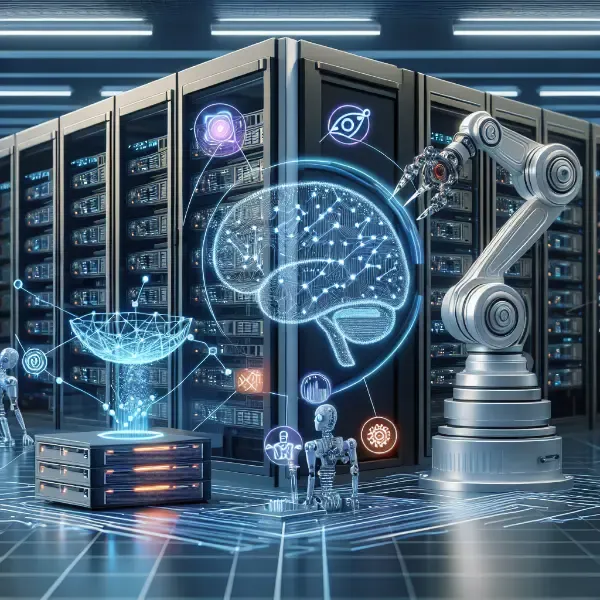
Implementing AI in process automation delivers measurable gains and relieves teams of workload, allowing them to focus on tasks that require empathy, creativity and judgement. It also benefits key regulated areas, where precision and repeatability are essential.
- Relieving people of tedious, repetitive tasks - Greater accuracy and consistency, fewer human errors, better regulatory compliance - Faster and better decisions thanks to predictive analytics - Process scalability and resilience during workload fluctuations - Better customer experience through automation and 24/7 service - A foundation for innovation and prediction-based business models
How to implement: from roadmap to integration
Effective AI implementation starts with a clear plan. First, identify high-volume processes that are highly structured and rule-based — this is where the impact of automation becomes visible fastest and where acceptance of change is built most quickly.

It is crucial to integrate AI solutions smoothly into existing workflows and decision-making mechanisms. Technical challenges or skills gaps can be reduced by combining Lean and Six Sigma with the Agile Lean Startup approach, building solutions iteratively: from PoC, through pilot, to scaling.
- Identify the processes with the greatest potential: repetitive, rule-based, prone to errors - Ensure system integration and data standardisation - Design decisions and exceptions so that people retain control where needed - Implement iteratively and measure KPI: cycle time, cost, quality, compliance - Strengthen team capabilities and change management
AI in practice: industries and use cases
AI is already delivering measurable results across many sectors today — from the back office to revenue-generating functions.

- HR and recruitment: faster and more accurate candidate sourcing - Supply chain: demand forecasting and real-time operations optimisation - Customer service: chatbots provide personalised support 24/7 - Banking: better fraud detection and stronger risk management - Insurance: faster claims handling and better risk assessment - Energy: optimisation of distribution and grid balancing - Inventory management: precise inventory management and stockout reduction
What comes next: shaping the future of automation
AI has stopped being an option — it is now a condition for maintaining growth momentum. Companies that synchronise their roadmap with AI capabilities will combine operational optimisation with strategic innovation.
From improving HR to autonomous processes in the supply chain and customer service, AI is setting new standards. By harnessing its potential in critical areas such as inventory management, organisations gain a lasting advantage and open the way to new business models and accelerated growth.
Need technology support?
Let’s talk about your project — from discovery to implementation.
Book a consultationWould you like to know more?
Explore other articles or let’s discuss your project
All articles Let’s design your AI application