Why experienced developers and smart frameworks beat no-code when building MVPs
No-code speeds up launch and cuts costs, but it limits flexibility, scalability and innovation. See when to choose developers and frameworks to build an MVP that truly grows with your business.
Tomasz Soroka
The rise of no-code and where its appeal comes from
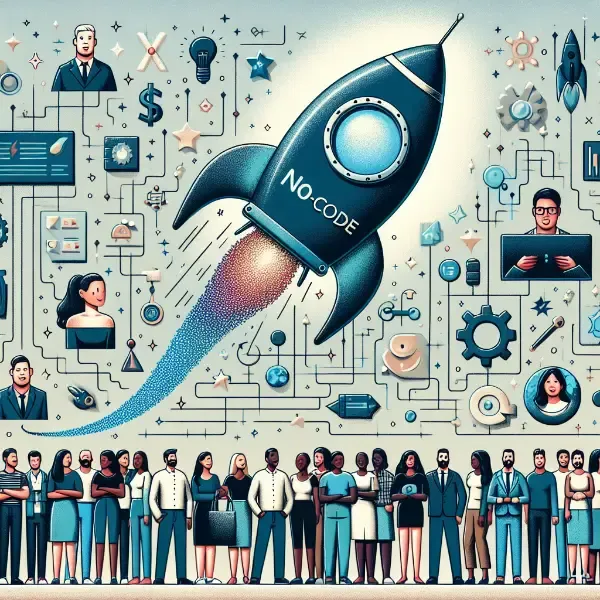
No-code is booming because it allows entrepreneurs without a technical background to quickly turn an idea into a working product using visual tools. It is a genuine democratisation of technology.
The strongest argument is cost. For a start-up funded out of pocket, cutting development expenses by 50–70% sounds like a lifeline. A website, a simple application, CRM or automations can be launched without hiring a team of engineers.
The second draw is simplicity. Instead of knowing Python or Java, familiarity with MS Excel or project management applications is enough. Building becomes more like putting blocks together than writing code from scratch.
This is not just a trend. No-code solves real pain points: it shortens time to launch and removes barriers to entry, giving many people a chance to build the first version of a product.
Where no-code stumbles in MVP practice
An MVP requires fast iterations, experimentation and adaptation to user feedback. Ready-made templates and the limited functional scope of no-code can make this difficult, unlike bespoke development.
The example of SuperHuman shows how crucial flexibility is. The team tested the product intensively and repeatedly modified features based on feedback. That scale of change can be difficult or costly on no-code platforms, which by nature favour a single, standardised way of operating.
As a result, frameworks that are too restrictive can stifle innovation and make it harder to create truly unique solutions. No-code is excellent for getting started quickly and cheaply, but it does not always provide the foundation for a robust, fully flexible MVP.
Customisation, flexibility and the role of real developers
Custom development using smart frameworks offers a level of freedom that no-code lacks. Here, solutions are tailored precisely to business requirements, which can be critical in highly complex industries.
Take finance: advanced risk management algorithms based on many variables rarely fit into a one-size-fits-all model. Likewise, in fast-changing sectors such as social media, products with unique features win out — features that cannot be assembled from ready-made blocks.
Twitter needed custom solutions to handle billions of queries and return content in real time. That is a level of complexity no-code cannot support — it required experienced developers and a dedicated architecture.
Team experience and intelligent framework selection translate into competitive advantage: greater freedom, scalability and the ability to build truly breakthrough features. When choosing an approach, it is worth looking beyond costs and focusing on the ability to align technology with the company’s vision.
Scaling and long-term growth: where no-code most often falls short
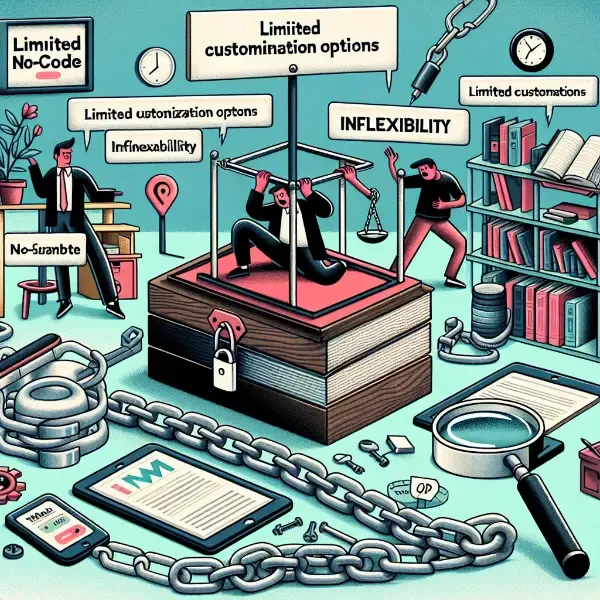
Scaling no-code can be bumpy, especially as integration requirements and demand for unique features grow.
Integrations with existing systems may not connect seamlessly. Challenges arise around data migration, security and integration through API — marketing promises flexibility, but in practice workarounds and compromises are often required.
Adding advanced capabilities such as complex automations, algorithms or machine learning operations often goes beyond platform capabilities. That limits innovation and the pace of product differentiation in the market.
There is also the risk of vendor lock-in, performance and throughput limits, pricing changes, or lack of control over infrastructure. In regulated industries, compliance and process auditability are an additional barrier.
Scaling with no-code requires a deliberate plan, continuous reviews and readiness to migrate parts of the product to bespoke solutions once you reach the platform’s limits.
What should you do about it in practice?

- Use no-code for fast validation: a landing page, a simple prototype, internal automations and CRM.
- Define a migration threshold: performance metrics, costs, security requirements and features that, once exceeded, you move into code.
- Design API-first and ensure data portability (export, webhooks). Build the core that differentiates the product as custom, and assemble the rest from services and no-code.
- Choose smart frameworks that increase productivity and quality: for example Django, Ruby on Rails, Laravel, Spring Boot, NestJS, Next.js — depending on domain and team needs.
- Plan for total cost of ownership: not only launch, but also maintenance, scaling, security, monitoring and compliance.
Summary
No-code is a great way to launch quickly and reduce costs, but its universal building blocks have limits. When flexibility, performance and innovation matter, experienced developers and smart frameworks offer the advantage. The best strategy is a deliberate mix: validate with no-code where it makes sense, and build the key elements of your MVP in a way that allows them to grow alongside your business.
Need technology support?
Let’s talk about your project — from discovery to implementation.
Book a consultationWould you like to know more?
Explore other articles or let’s discuss your project
All articles Let’s design your AI application