Chagall for Children: art that engages the youngest audiences
Business context
Kohl Children’s Museum of Greater Chicago is an American institution whose mission is to spark curiosity and imagination through educational experiences. The museum welcomes around 300 thousand visitors each year, and its membership community includes nearly 6 thousand families. Its exhibitions are designed for children from birth to the age of 8 and align with the Illinois State Learning Standards.
In 2015, the museum decided to introduce the youngest audiences to the world of art in a new way, using interactive digital tools. The goal was to show that engaging with painting can be fun while also educating and inspiring.
To bring this vision to life, the museum approached Leaware to create an application that would bring Marc Chagall’s works to life and allow children to co-create the artistic experience. The project was also intended to demonstrate the team’s maturity in building educational, engaging applications.
Challenge
The biggest challenge was designing an experience suitable for a very young audience. The interface had to be instantly understandable, with simple navigation, short interaction paths, and clear prompts that would not overload a child’s attention.
It was equally important to combine play with meaningful educational content. The application needed to present Marc Chagall’s work in an accessible way, while respecting the original, and at the same time offer personalisation elements that would strengthen the bond with the artwork.
Additionally, it was necessary to ensure smooth and reliable performance on the Windows platform, so that the experience would be consistent and comfortable for both children and their carers.
Solution
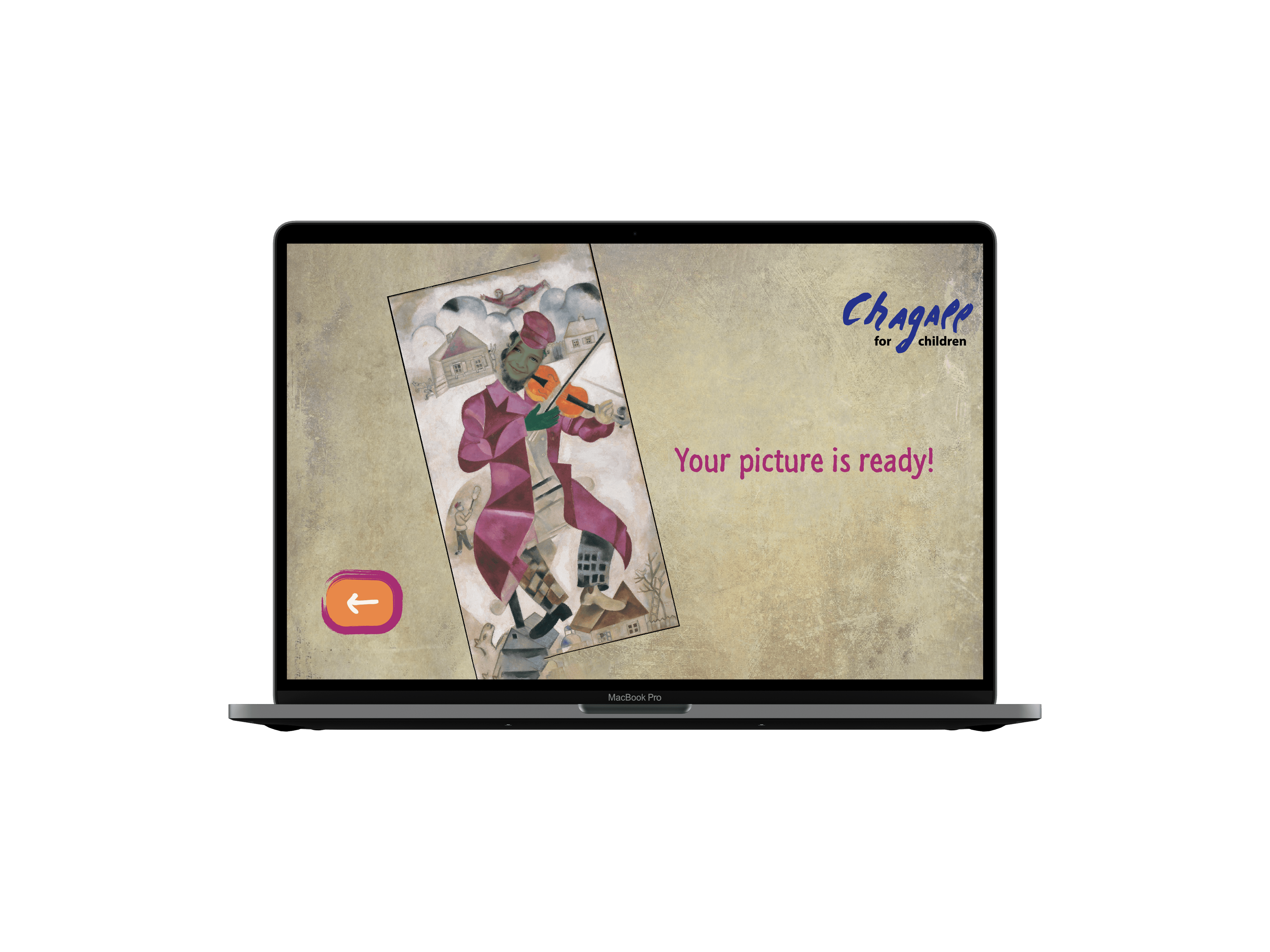
Leaware developed the Chagall for Children application using Windows Universal technology on the Windows platform. Its key feature is the ability to take a photo and integrate it into the famous painting The Violinist, turning the viewer into an active participant in the scene.
The interactions were designed to guide the child step by step through the creative process: from capturing a photograph, through simple editing, to seeing the immediate result within the artwork. Large interface elements, clear messages, and a minimal number of decisions lower the barrier to entry and support independence among the youngest users.
This format combines educational value with a high level of engagement. The museum and users provided very positive feedback, pointing to growing interest in art and enthusiastic reactions from children and parents, while detailed download data remains confidential.